Place Names and Landscape Descriptions: How Rural Stories Locate Events
Place names and landscape descriptions locate rural stories in different ways. Learn what each clarifies, what it leaves vague, and what to check next.
The common mistake in reading a rural headline is treating a place name as a complete location. A name may point toward a broad area without showing which road, field, valley, or community the story concerns. Landscape descriptions can narrow the picture, but they may omit the name that lets readers connect the event to local knowledge. Reading both forms of orientation carefully helps you see what a headline establishes—and what remains uncertain.
What does a place name tell you?
A place name identifies a location through a label shared by maps, residents, public agencies, and newsrooms. It might name a village, township, county, river, or a smaller feature such as a bridge or ridge. The name gives readers a point of reference they can recognize or look up.
That reference can be useful even when readers do not know the area. A named village suggests that the story concerns a particular settlement, while a county name places it within a larger administrative area. A river name may help readers understand which watershed or route is involved.
But names do not all locate events with the same precision. “Near Millford” might mean just outside the village, along a road leading to it, or somewhere in the surrounding rural district. A county name could cover many communities and a large variety of terrain. The more familiar the name sounds, the easier it is to assume it tells you more than it does.
When a headline names a place, ask what kind of place it is: a settlement, jurisdiction, natural feature, or informal local area. That distinction can reveal how much detail the label supplies.
What does terrain add?
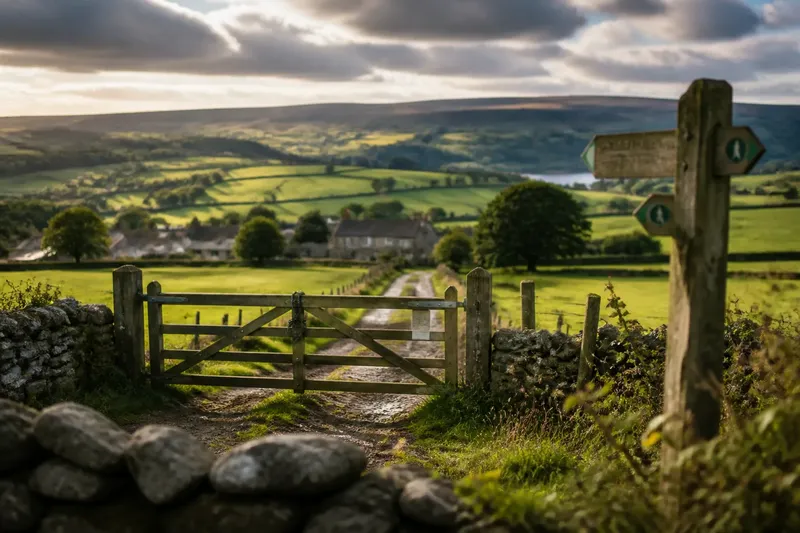
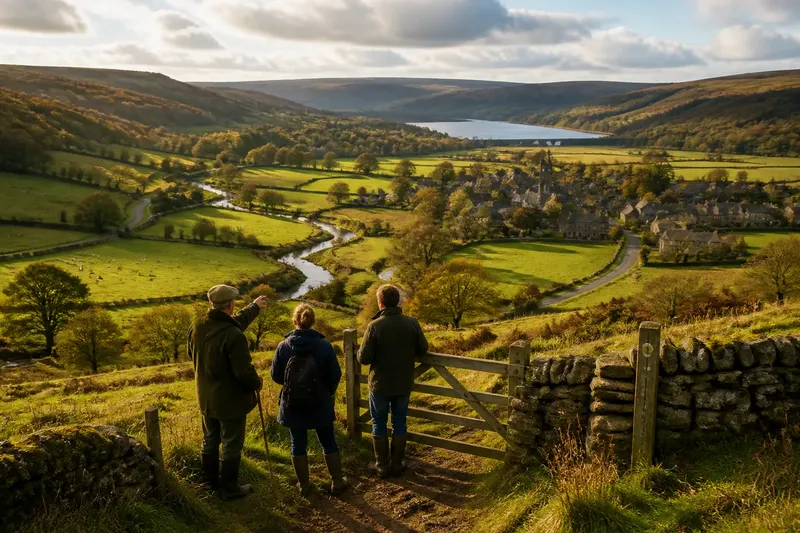
A landscape description locates an event by describing physical features rather than naming them. Phrases such as “on a wooded slope,” “beside a creek,” or “at the edge of the floodplain” give readers a sense of the setting. They can suggest how land, weather, access, and nearby activity relate to the story.
Terrain can also make an account easier to picture. A report about a blocked rural road means something different if the road crosses an exposed ridge than if it runs through a narrow valley. A description of fields above a river may help readers understand why water, soil, or access matters, even before they know the property’s name.
Yet descriptive language can be broad. “Remote hillside” does not identify which hillside, how far it is from a settlement, or who uses the land. “Along the river” might refer to a long stretch with different roads, communities, and land uses. Descriptions can add physical texture without providing a verifiable point on a map.
Read terrain words as clues about setting, not as substitutes for a precise location. Notice which features are named and which are left general.
Why use both forms?
Place names and terrain descriptions answer different questions. A name can help readers identify an area; a description can explain what that area is physically like. Together, they may give a more useful orientation than either alone: a named road near a creek, for instance, offers both a searchable label and a visible feature.
They can also expose a gap. If a report names a county but describes only “steep ground,” readers may know the administrative setting but not the specific site. If it names a bridge but says nothing about the surrounding landscape, readers may identify the crossing without understanding why its location matters.
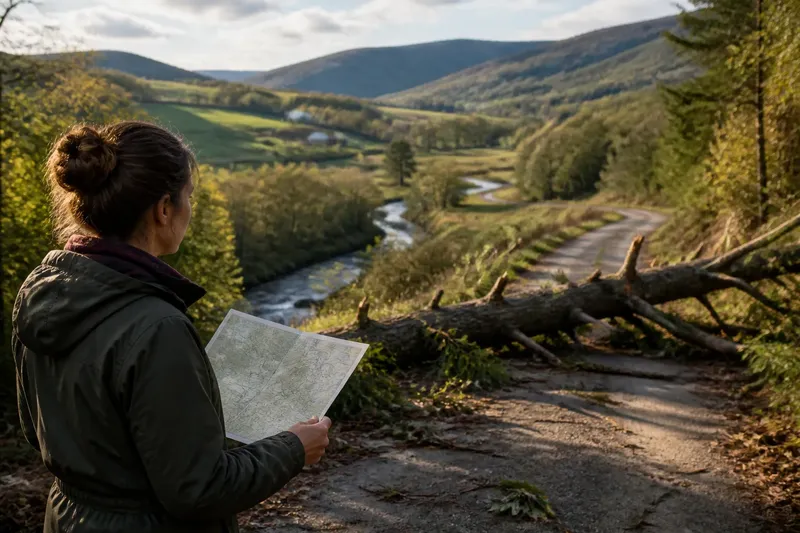
Imagine a fictional report about a fallen tree that closes a route near Alder Creek. The name points to a feature readers might search on a local map, while the description “on the wooded slope above the creek” suggests the terrain. If the report gives no road name or nearby settlement, the exact closure point remains unclear. The expected observable result of checking the story is a clearer distinction between what is located and what is merely described—not automatic certainty about the site.
Ask what each phrase contributes. A place label can anchor the story; a landscape phrase can explain its physical setting.
How specific is the wording?
Specificity depends on the scale and distinctiveness of a term. A county is usually broader than a named hamlet, and a hamlet is usually broader than a particular crossroads. A “ridge” may describe many landforms, while a locally named ridge can be more useful if its boundaries are understood.
Precision also depends on the reader. A place name familiar to residents may mean little to someone outside the area. A terrain phrase such as “below the water tower” may be immediately clear locally, but difficult to interpret without a map or other reference. Familiarity is not the same as exactness.
Look for a second locator that connects the wording to something independently recognizable: a road, neighboring settlement, named stream, or map feature. If the story uses only a broad region or generic terrain, treat its location as broad too. Details in the article may narrow it, but avoid filling in missing information from assumptions.
What should you check next?
Does the name identify a town or a whole district?
Check whether the label refers to a settlement, county, township, or geographic feature. The type of name sets the scale of the location, and a broad jurisdiction should not be read as a single community.
Can you match the description to a map?
Look for a named road, creek, ridge, or nearby settlement that connects the description to a map. A terrain phrase alone may fit many locations, so note whether the report provides a second anchor.
Do local terms have more than one meaning?
Place names and landscape terms can be used differently by residents, agencies, and newsrooms. If a label seems ambiguous, look for how the story defines it rather than assuming that its everyday meaning is the only one.
Does the location affect the story’s meaning?
Ask whether the setting helps explain access, land use, water, weather, or proximity to a community. If the physical location matters to the claim, a broad name or vague terrain phrase may leave an important part of the account unresolved.
When is a location still unclear?
A story can be responsibly reported and still use a location that is too broad for a reader’s question. The article might protect a private residence, describe an event before officials have established an exact site, or use a regional label because that is the relevant scope. Those possibilities do not tell you which applies. They are reasons to distinguish missing detail from an error.
Notice whether the wording is explicit about its limits. “In the county” states a broad area; “near the village” signals proximity without defining it. By contrast, a headline that gives a terrain description without a clear reference may sound more exact than it is. Keep your reading proportional to the words on the page.
If the location matters, consult the article body for additional identifiers, then compare those identifiers with a reliable map or an official local notice. Do not use a map label to claim more than the report says: matching a creek or road can clarify geography without confirming the event’s precise site. For local names whose boundaries are disputed or informal, the source’s own explanation may be the most useful clue.
The practical habit is simple: separate the named place from the described landscape, then note what each one lets you locate. That small distinction makes place names and landscape descriptions easier to read—and makes the remaining uncertainty visible instead of silently filling it in.