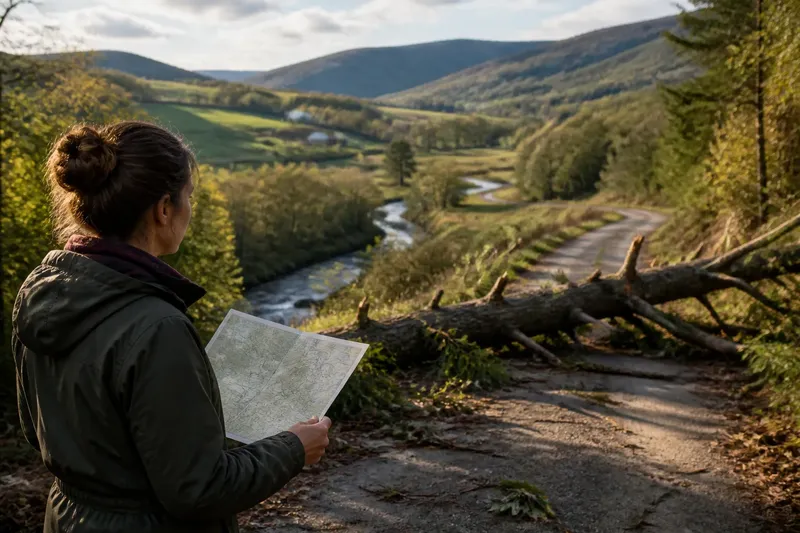
A Sunday Reading Hour for One Developing Story
A Sunday reading hour for one developing story helps you trace how a local issue moves from headline to decision, without rereading the same coverage.
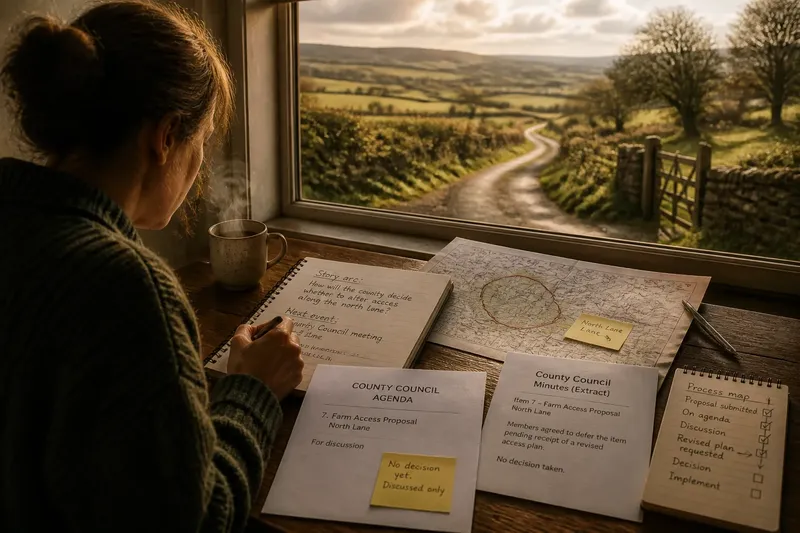
The most common mistake with a developing rural story is reopening the same feed each week and rereading familiar headlines. It costs you attention without clarifying what has happened. A focused Sunday reading hour can instead follow one local issue through its changing stages, from a first report to a meeting, notice, or decision.
The aim is not to preserve every claim or build a private archive. It is to understand the story’s path: what brought it into public view, which local process is shaping it, and what event might move it forward. That approach suits a proposed road change, a new farm scheme, or a discussion about a rural service.
Pick a Story Arc
Choose a story with a visible process or sequence, rather than one that produces a steady stream of loosely connected commentary. Look for a question that can develop through identifiable stages: a proposal is submitted, a council considers it, residents respond, or an agency issues a notice.
Write one sentence describing the arc you want to follow. For example: “How will the county decide whether to alter access along the north lane?” This gives your reading a boundary. A broader question, such as “What is happening to the countryside?” can pull in material that does not belong to the same story.
Keep practical urgency separate from a reading routine. If a current closure or service alert affects your immediate plans, check the responsible local authority or service directly. A weekly session is for understanding a developing account, not for making time-sensitive decisions.
Map the Process
Rural stories often move through a local process that is unfamiliar to readers outside it. A planning application, parish meeting, land-management notice, or consultation can create a sequence of public documents and responses. Identify the process before collecting more coverage.
- Find the responsible body: Check whether the story names a county council, parish council, land agency, utility, or other decision-maker. If it does, follow that body’s relevant notices; if it does not, keep the authority as an unresolved question.
- Look for the next public event: Note a named meeting, consultation, hearing, or publication. If one is identified, mark it as the next point to check; if none is given, avoid assuming a decision date.
- Identify the document type: A proposal, agenda, minutes, decision notice, and appeal do different jobs. If the item is a proposal, treat the outcome as pending; if it is a decision notice, read what it actually authorizes or refuses.
- Check the area covered: Compare the place names in reporting and official material. If both point to the same lane, field, or settlement, keep them together; if they refer to different areas, track them separately.
- Note who can respond: A notice may invite residents, landholders, or organizations to comment. If it names a response route, record that route; if it does not, do not assume that informal discussion is part of the formal process.
- Mark what would close the arc: Decide whether a recorded vote, published notice, completed work, or final service arrangement would answer your question. If the story reaches that event, review whether your original question is settled; if not, write the remaining issue separately.
These checks turn a stream of updates into a sequence of things to look for. Keep the next expected event in view, not every possible development.
Follow the Local Route
Start with the outlet or local notice that brought the story to your attention. Then look for the place where the next stage is likely to appear: a council agenda, planning portal, parish minutes, local authority alert, or land agency statement. Each source has a different role. A news report may explain why an issue matters, while a formal notice may state the exact action under consideration.
Do not treat a document as a complete account simply because it is official. An agenda may list an item without showing what happened at the meeting. Minutes may record a decision but leave out the practical concerns residents raised. Read each item for the part of the process it can clarify.
Say you are following an invented proposal to move a farm access point beside a village lane. You begin with a local report that says the county will consider the request. You then check the council agenda, which lists the proposal for discussion, and note that the agenda does not record an outcome. At the next Sunday session, you find minutes stating that members deferred the item until they receive a revised access plan. Your working answer is now “no decision yet; revised plan requested,” and the next useful source is the later agenda or plan, not another article repeating the original proposal.
Read the Place Closely
Place names can make two accounts sound inconsistent when they describe different parts of a rural area. A “lane,” a “track,” and a “public right of way” may refer to nearby but distinct routes. A report may also use a familiar village name where an official document gives a field, road, or parish reference.
When location matters, copy the exact name used and check a suitable map or the relevant notice. Do not infer that a restriction on a site entrance applies to a public path nearby. If the location remains unclear, make that the next question to resolve rather than letting a broad headline settle it.
Land words also carry different meanings in different settings. “Common,” “estate,” “catchment,” and “field” may be local descriptions, formal categories, or shorthand. If a distinction affects the story you are following, check the document that uses the term or ask a knowledgeable local source what it refers to.
Choose What to Reopen
A weekly review needs a small, deliberate set of sources. Keep the items that help explain the story’s process, place, or next stage. Let repeated commentary wait unless it adds a new document, a different account of the process, or a meaningful local perspective.
- Keep the initiating report: Use it to remember what first brought the issue to public attention. If later reporting changes a central detail, note the correction beside it; if not, avoid rereading it as though it were a current update.
- Keep the process source: Save the relevant agenda, notice, or minutes. If it records a new stage, add that stage to your account; if it only repeats an earlier item, leave the sequence unchanged.
- Keep a local account when it adds context: A resident, worker, or local group may explain how a place is used. If the account clarifies a practical detail, note who is speaking and what experience they describe; if it is a general opinion, do not treat it as a shared local position.
- Keep broader coverage only when it connects the issue to a wider policy: If it explains a rule or decision that applies to this place, record the connection; if it discusses a general trend without showing its local relevance, set it aside.
Before opening another item, ask what part of the story’s route it could clarify. If you cannot name one, it can wait.
Questions About Story Arcs?
How do I know a story has a clear arc?
Look for a process with recognizable stages, such as a proposal, public consideration, and a recorded outcome. If coverage offers only recurring reactions with no named next event, narrow your question to one place, decision, or service.
What if the next stage is delayed?
Record the delay and the source that describes it, then check whether a new meeting or document has been named. If no next stage is available, pause the weekly search rather than treating the lack of updates as a result.
Can a local conversation explain the formal process?
It can help explain how people understand a place or a proposal, but it may not state what the responsible body has decided. Use it to identify a question for the relevant notice, meeting record, or authority.
When is the story arc complete?
It is complete for your purpose when the event you set out to follow has occurred and the relevant source records its outcome. If the outcome leaves a separate question, start a new, narrower arc instead of stretching the old one indefinitely.
Close Each Session
Begin by reading your sentence about the story arc and checking for the next event you expected. Then spend the session on one useful task: find the document, establish the location, or check whether a named meeting took place. A short written note can record the current stage in plain language.
For example: “The access proposal is listed for discussion; no decision appears in the available minutes; check the next agenda for a revised plan.” This describes the route ahead without pretending that the unresolved outcome is already known.
A Sunday reading hour for one developing story works best when each session has a specific purpose. The search phrase “Sunday reading hour for one developing story” can point readers toward that routine, but the useful habit is simpler: follow the next local stage, and return only when there is a reason to do so.